Accelerators — Sulfenamides (CBS, TBBS, DCBS)
Sulfenamides are delayed-action primary accelerators. They give processing safety before cure starts and then a fast cure. This makes them the core accelerator group in the tire industry.
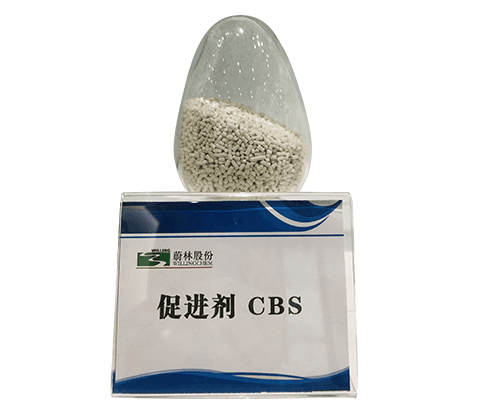
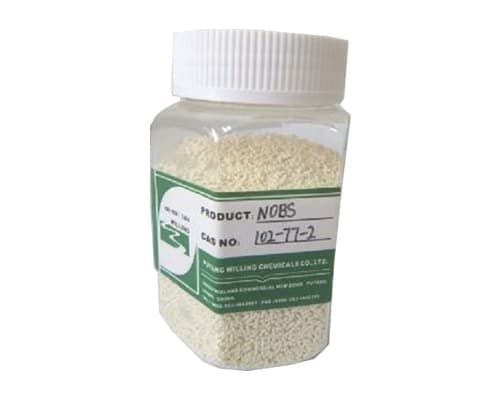
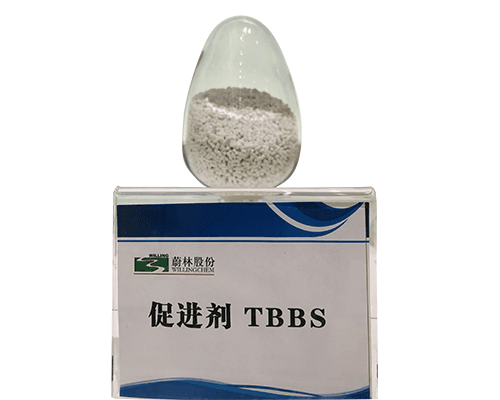
CBS is the most common type. TBBS gives a slightly longer delay and a higher modulus. DCBS gives the longest delay and is used in steel cord compounds. NOBS can form nitrosamines, so check your target market rules.
Request a quote, TDS or sample

Frequently asked questions
CBS vs TBBS: what is the difference?
Both are core sulfenamide accelerators in the tire industry. CBS (CAS 95-33-0) is the most common type. TBBS (CAS 95-31-8) gives a slightly longer delay and a higher modulus and is common in tire tread compounds.
When is DCBS selected?
DCBS (CAS 4979-32-2) gives the longest delay among sulfenamides. It is selected for thick parts and steel cord adhesion compounds.
What can replace NOBS?
NOBS can form N-nitrosomorpholine during cure. Where this is restricted, TBBS is the usual replacement. If a longer delay is needed, DCBS or TBSI is evaluated.
What are the chemical names of CBS, TBBS and DCBS?
CBS: N-cyclohexyl-2-benzothiazolesulfenamide. TBBS: N-tert-butyl-2-benzothiazolesulfenamide. DCBS: N,N-dicyclohexyl-2-benzothiazolesulfenamide.